Overview
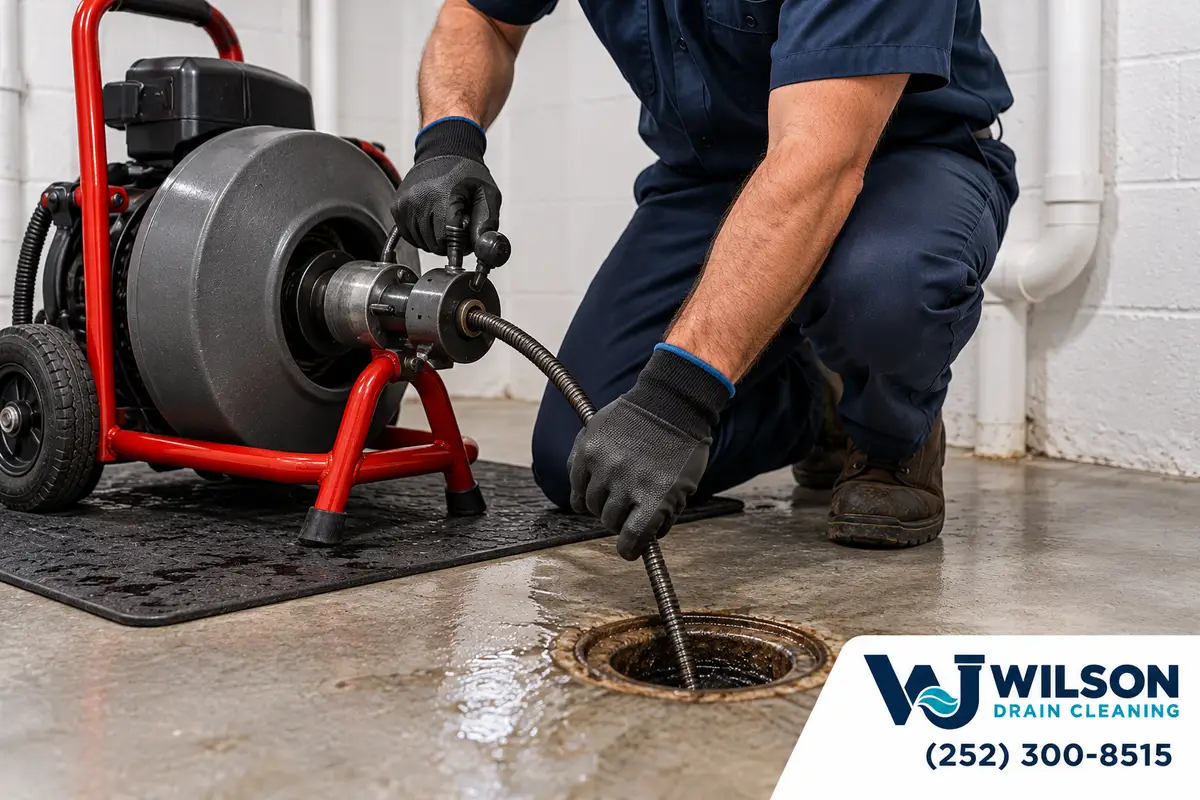
Drain cleaning services in Wilson, NC cover kitchen sinks, bathroom sinks, tubs, showers, toilets, laundry standpipes, floor drains and outdoor drainage lines. Many soft clogs clear with a hand auger or cable machine. Grease, scale and roots may need water jetting. Service is available in Wilson, Elm City, Lucama and nearby communities.
Drain Cleaning Services
The correct service depends on the affected fixture, the access point and what is blocking the pipe. Choose the closest match below or call (252) 300-8515 if several drains are involved.
Kitchen Sink Drain Cleaning
Kitchen lines collect cooking grease, food particles, soap and disposal waste. A cable can open a compact clog near the sink. Heavy grease along the pipe wall may need a more complete cleaning. See kitchen sink drain cleaning for disposal clogs, slow double sinks and recurring kitchen backups.
Bathroom Drain Cleaning
Hair, soap film and product residue often gather inside bathroom traps and branch lines. Slow tubs and showers should be cleared before standing water reaches the floor. The bathroom drain cleaning page covers sinks, tubs and showers without competing with toilet or main-line services.
Toilet Clog Removal
A plunger may move a soft toilet clog. Repeated overflow, weak flushing or water rising in a nearby tub can point to a deeper restriction. Toilet clog removal covers fixture clogs, trapped objects and signs that the main drain needs checking.
Laundry and Floor Drains
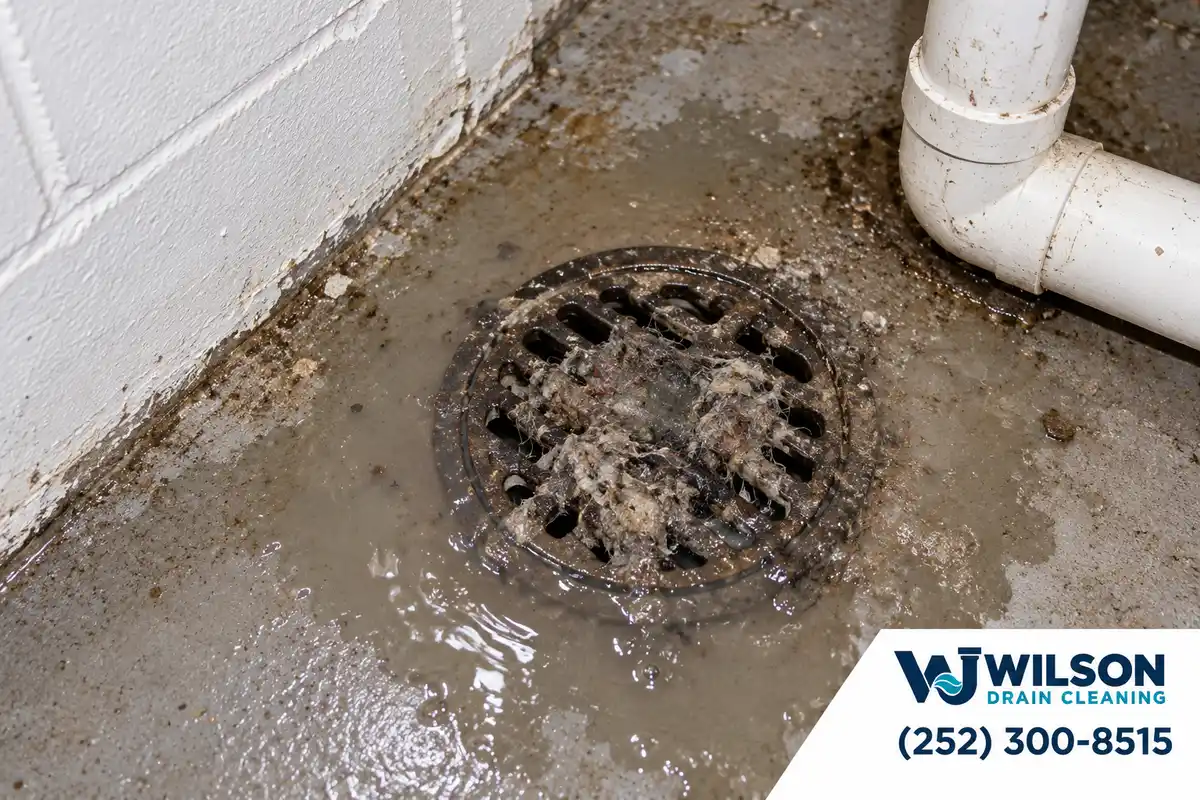
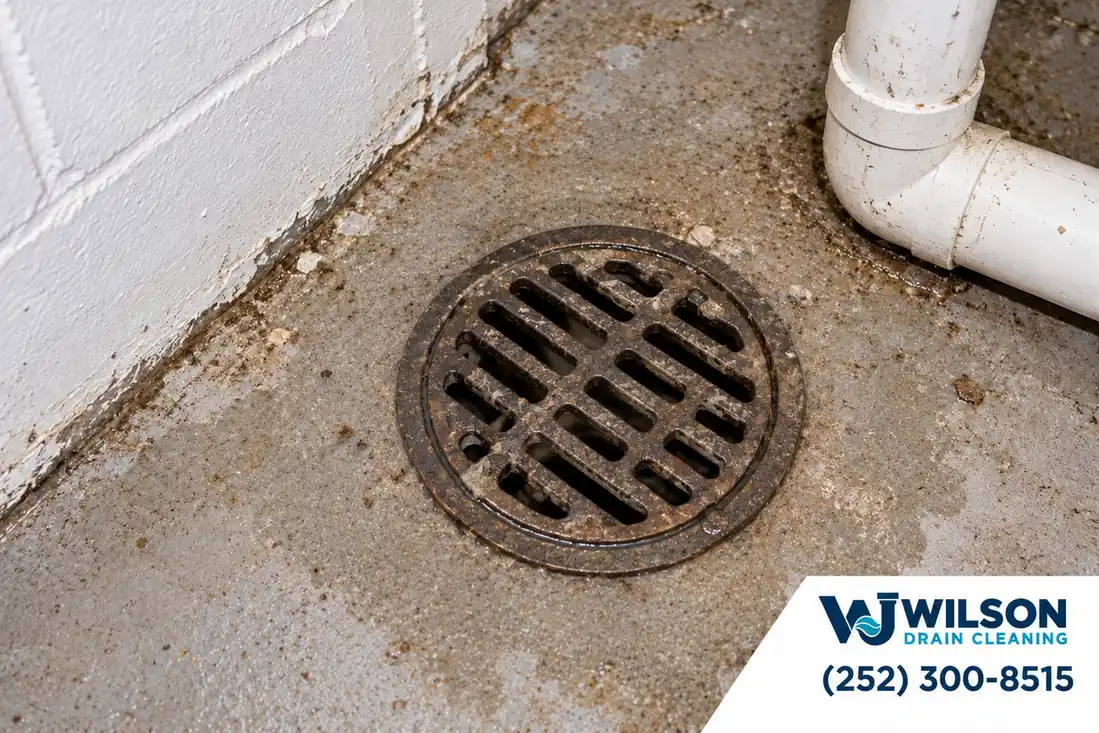
Laundry standpipes carry lint, detergent residue and a large volume of water in a short time. Floor drains collect dirt and debris at the lowest point in a building. Service for laundry and floor drains addresses slow flow, standpipe overflow and water returning at the floor.
Hydro Jetting
Water jetting cleans material from the full inside surface of a suitable pipe. It is often used for grease, heavy scale and roots after the line condition is checked. This method is explained in detail on the hydro jetting page.
Yard and Storm Drains
Outdoor drains can collect leaves, pine straw, silt and soil washed into low areas. A blocked line may leave water near a foundation, driveway or walkway after heavy rain. Service for yard and storm drains focuses on private property drainage, not the City's public stormwater system.
Why Drain Cleaning Matters in Wilson
Wilson's drainage problems come from household buildup, older pipe materials and very flat ground. A small restriction can become a recurring backup when flow is already slow.
The City of Wilson recorded 15 reportable sanitary sewer overflows during fiscal year 2023 to 2024. Grease caused more than half of those sewer blockages. The City also reports that many grease-related backups begin in residential areas. Hot grease enters a kitchen line as liquid, cools on the pipe wall and catches food waste.
Older homes around Old Wilson, West Nash, Broad Kenan and East Wilson may contain cast iron inside the building and clay, Orangeburg or mixed materials outside. Rough cast iron holds hair, soap and paper. Clay joints can admit roots. Orangeburg can lose its round shape as it ages. The cleaning method should match the material and condition.
Topography adds another local factor. Hominy Swamp runs through central Wilson with very little fall across its course. Private drains still need the correct slope, but buildup has more opportunity to settle when water moves slowly. Heavy rain can also reveal cracked outdoor lines, poor connections and low areas that already drain badly.
The Clog Changes With the Fixture
A kitchen restriction often starts with grease that catches food and detergent residue. A bathroom sink or shower usually collects hair, soap film, toothpaste and grooming products. Toilets stop when too much paper, wipes or an object reaches the trap or branch line. Laundry drains carry lint and concentrated detergent. Outdoor drains collect soil, leaves and small roots.
That difference matters. A small hand auger may be enough for material close to a fixture. A longer cable reaches a branch line. Grease spread along many feet of pipe needs more than a small opening through the center. Roots outside the building require cutting, complete removal where practical and a camera view of the entry point. Treating every stopped drain the same way can restore temporary flow without solving the reason it stopped.
The number of affected fixtures also changes the diagnosis. One slow sink usually points to a nearby trap or branch. A toilet, shower and laundry drain reacting together point deeper into the private sewer lateral.
How It Works Step by Step
Drain cleaning starts by locating the restriction. The machine comes after the diagnosis.
1. Identify the pattern. The technician asks which fixtures are affected and whether using one fixture changes another.
2. Choose the access point. Access may be through a P-trap, fixture opening, floor drain, cleanout or another suitable point.
3. Select the tool. A hand auger handles small fixture clogs. A cable machine reaches farther into branch and main lines. A jetter cleans suitable lines with pressurized water.
4. Clear the material. The tool is advanced through the restriction without forcing equipment that is too large for the pipe.
5. Test the flow. Water is run through the connected fixtures to confirm that the line carries normal volume.
6. Check recurring or main-line problems. A camera can show remaining grease, roots, cracks, offsets or a low section.
7. Explain the result. The customer sees the finding and receives practical steps that fit the cause.
Cleanout access matters. A reachable cleanout can reduce time and avoid pulling a toilet. A tight crawl space, roof access or buried cleanout can increase labor.
Before and After Examples
Snaking vs Hydro Jetting: Which One Do You Need?
Snaking opens a path through a clog. Hydro jetting scrubs buildup from the pipe wall. The better method depends on the material inside the line and the condition of the pipe.
When Snaking Makes Sense
A cable machine is usually the first choice for hair, paper, wipes, soft waste and many isolated fixture clogs. Different heads can break, cut or retrieve material. Snaking restores flow without using large volumes of water.
The limitation is coverage. A cable may punch through the center of heavy grease while leaving a thick coating behind. The drain flows again, but the remaining material can catch new waste.
When Jetting Makes Sense
Jetting uses controlled high-pressure water and a selected nozzle to wash grease, mineral scale and cut roots from a suitable line. It works along more of the pipe surface than a cable.
Jetting is not automatic. A fragile, collapsed or severely damaged pipe may not be a good candidate. Recurring main-line clogs often need a camera check before the final method is chosen.
How Much Does Drain Cleaning Cost in Wilson?
Regional 2026 pricing gives a useful starting point, but it is not a Wilson quote. A single sink, tub or toilet clog in the Raleigh area commonly runs about $100 to $275. Main sewer-line cleaning may range from roughly $425 to $725. Hydro jetting commonly falls near $350 to $600, with complex work costing more.
Several details move the final price:
- The distance from the access point to the clog
- Whether a cleanout is available
- Whether a toilet or trap must be removed
- Hair and soft waste versus grease, scale or roots
- Pipe diameter and line length
- Crawl-space, roof or buried access
- Night, weekend or emergency timing
- Camera work, locating or recorded footage
A phone estimate should give a likely range. The firm price is confirmed after access and pipe conditions are checked.
Signs Your Drain Needs a Pro, Not a Plunger
Call when several fixtures are affected, sewage appears or the same drain stops again after a recent clearing. Repeated plunging cannot correct a root entry, damaged joint or pipe that holds standing waste.
Water Rises in Another Fixture
Water rising in the tub when a toilet flushes, or a toilet bubbling when the washer drains, points to a shared line. Stop using water until the restriction is located. Each added gallon can return through the lowest fixture.
The Drain Gurgles or Smells
Gurgling means air is moving through water in a restricted pipe. A sewer smell may come from a dry trap, loose seal, blocked vent or drain restriction. The connected fixtures help narrow the cause.
The Clog Returns Within Weeks
A quick return often means buildup remains on the pipe wall or the line has roots, scale, an offset joint or a low section. Repeated surface clearing costs more over time. A camera shows whether cleaning was incomplete or the pipe has a structural problem.
Garbage Disposal Clogs
Disposals do not make food disappear. Grease, rice, coffee grounds, fibrous vegetables and potato peels can pack into the P-trap or branch line. Turn off power before checking the disposal. Never place a hand inside the opening. A jammed unit and a blocked drain are different problems.
Chemical Cleaner Does Not Fix the Flow
Caustic drain products can create heat, fumes and splash hazards. They may open a narrow path through soft material but rarely remove a full grease coating or root mass. Tell the technician if chemicals have entered the drain. Older or weakened piping deserves extra care.
Protecting Your Home, Pipes and Yard
Good drain cleaning restores flow without creating another problem. The work area, the access point and the pipe condition all matter.
Place removed traps and dirty cable equipment on contained surfaces. Keep children and pets away from an open line.
Harsh chemicals should not be the default treatment. Mechanical cleaning removes the obstruction. Water jetting removes compatible buildup from suitable pipe. Camera footage supports a repair recommendation when cleaning alone is not enough.
The technician should also identify responsibility honestly. If standing water at a property-line cleanout shows a likely City-side blockage, call the City of Wilson at (252) 399-2424 before paying for private work.
Related Services and Service Areas
A problem affecting several fixtures may belong under sewer line services. Wastewater entering the building needs emergency drain help and immediate water-use control.
Coverage includes Wilson, ZIP codes 27893 and 27896, Elm City, Lucama, Stantonsburg, Black Creek, Sims and surrounding communities. Neighborhood service includes Old Wilson, East Wilson, Five Points, Forest Hills, Westwood and Downtown Wilson.
FAQs
How Long Does Drain Cleaning Take
Main-line cleaning and water jetting may take one to three hours depending on access, pipe length and the material inside the line.
Are Chemical Drain Cleaners Safe for Old Pipes
Repeated use is not recommended for older or weakened piping. Caustic products can create heat, fumes and handling hazards without removing grease, roots or hard scale. Mechanical cleaning or suitable jetting addresses the blockage directly.
Why Does the Drain Keep Clogging
A drain that clogs again within weeks may still have material on the pipe wall. Roots, heavy scale, an offset joint or a low section can also catch waste. A camera inspection helps identify the real cause.
Can a Garbage Disposal Clog Be Cleared
Yes. The disposal chamber, P-trap and drain line can be checked separately. Many disposal-related clogs contain grease, rice, coffee grounds, peels or fibrous food packed beyond the unit.
Wilson NC Drain Cleaning Service Coverage Map
Our drain cleaning and sewer line service crews are dispatched throughout this service territory. View our local coverage and dispatch area below.
Get a Free Quote
Call (252) 300-8515 for a price range and scheduling. Details can be provided through the get a quote form.
Learn more about the technicians before scheduling.
Call (252) 300-8515 ↗