Overview
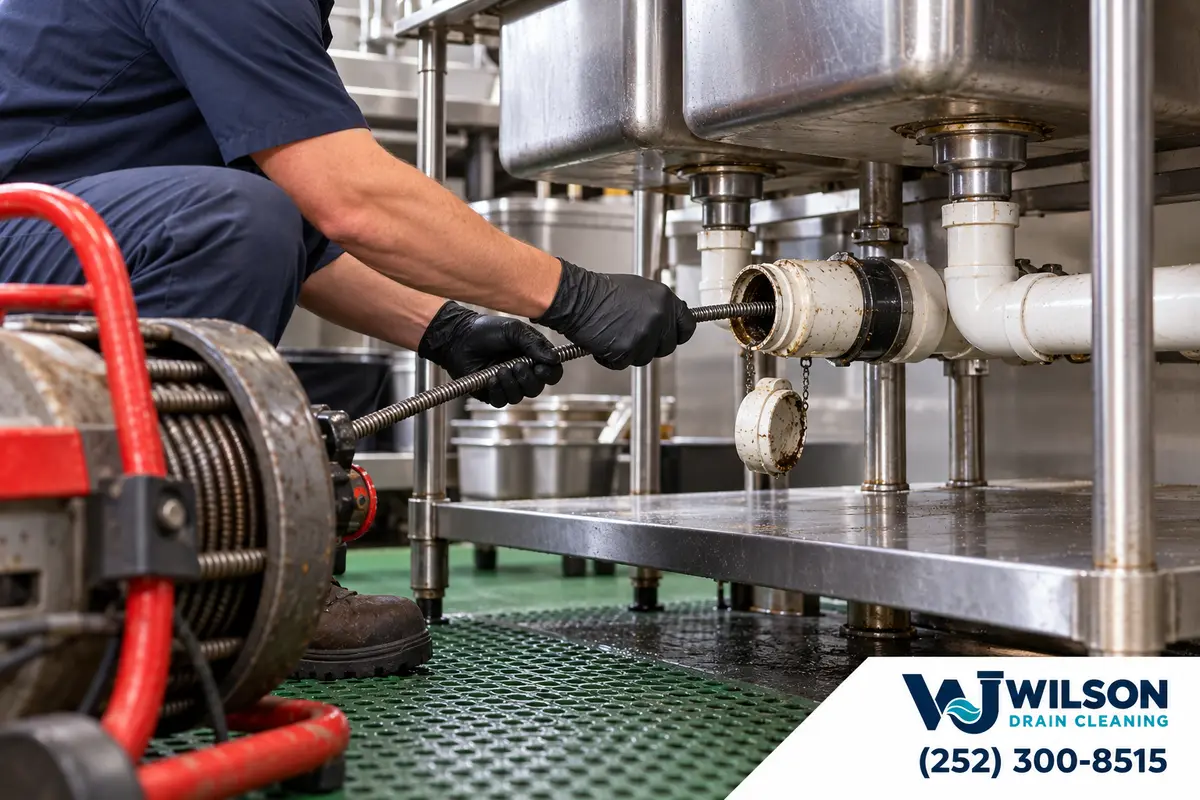
Restaurant drain cleaning should follow the wastewater path through the kitchen instead of treating every slow fixture as a separate clog. A site check identifies which fixtures share a branch and whether the restriction sits before or after the grease interceptor.
Common service points include:
- Floor sinks below prep equipment and dish stations
- Three-compartment sink branches
- Mop and utility sink lines
- Dish-machine discharge lines
- The kitchen line leading to the interceptor
- The building drain between the interceptor outlet and the main
- Accessible cleanouts serving the commercial kitchen
The grease interceptor is a separate component. grease trap cleaning removes accumulated liquids and solids from that device. Grease-line cleaning addresses buildup inside the connected pipe. A clear quote should state which work is included.
Camera checks can help confirm the condition of a larger accessible line. Small branches, tight bends and standing water may limit what a camera can show.
What Restaurant Drain Cleaning Includes
Grease does not need to look solid when it enters a drain. The City of Wilson FOG program explains that fats, oils and grease can enter as hot liquid, cool inside the system and form a blockage.
Wilson recorded 15 reportable sanitary sewer overflows in fiscal year 2023 to 2024. Nine listed grease as a cause or contributing cause. That makes routine kitchen-line care a practical operating issue, not a cosmetic task.
Why Restaurant Drain Cleaning Matters in Wilson
The risk can be harder to trace in older commercial buildings around Downtown Wilson. Long runs, shared walls, previous alterations and limited cleanout access may separate the backed-up fixture from the actual restriction. Ward Boulevard restaurants may have newer layouts, but high meal volume and fryer use can load lines quickly.
Residential products made for kitchen drain grease are not a substitute for diagnosing a commercial branch. Heat or chemicals may move grease farther downstream without removing the coating from the pipe.
How It Works Step by Step
A controlled process protects the kitchen and shows whether flow has returned.
1. Inspect the affected fixtures, floor sinks and accessible cleanouts.
2. Trace the likely branch and determine whether the restriction is before or after the interceptor.
3. Check visible pipe material, fittings and access before selecting equipment.
4. Use cable equipment when the goal is to open a compact obstruction or create initial flow.
5. Use hydro jetting when the pipe can safely accept it and grease coats the wall.
6. Run water from the connected fixtures and watch the downstream flow.
7. Record the lines serviced and any condition that needs follow-up.
Jetting pressure, nozzle and flow should match the line. Excess pressure is not a sign of better work. Brittle pipe, poor joints or an unknown route may call for a different approach or further inspection.
Most kitchen backups give warning before the line stops completely. The pattern helps locate the problem.
Floor Sink Backups
Water rising in a floor sink when the dish machine drains often points to a restricted shared branch. Stop adding water if overflow is likely. Keep staff and food-contact items away from the affected area.
Slow Three-Compartment Sinks
One slow bowl may have a local obstruction. All three bowls draining poorly can indicate a downstream branch restriction. Food scraps, labels and grease often collect at changes in direction.
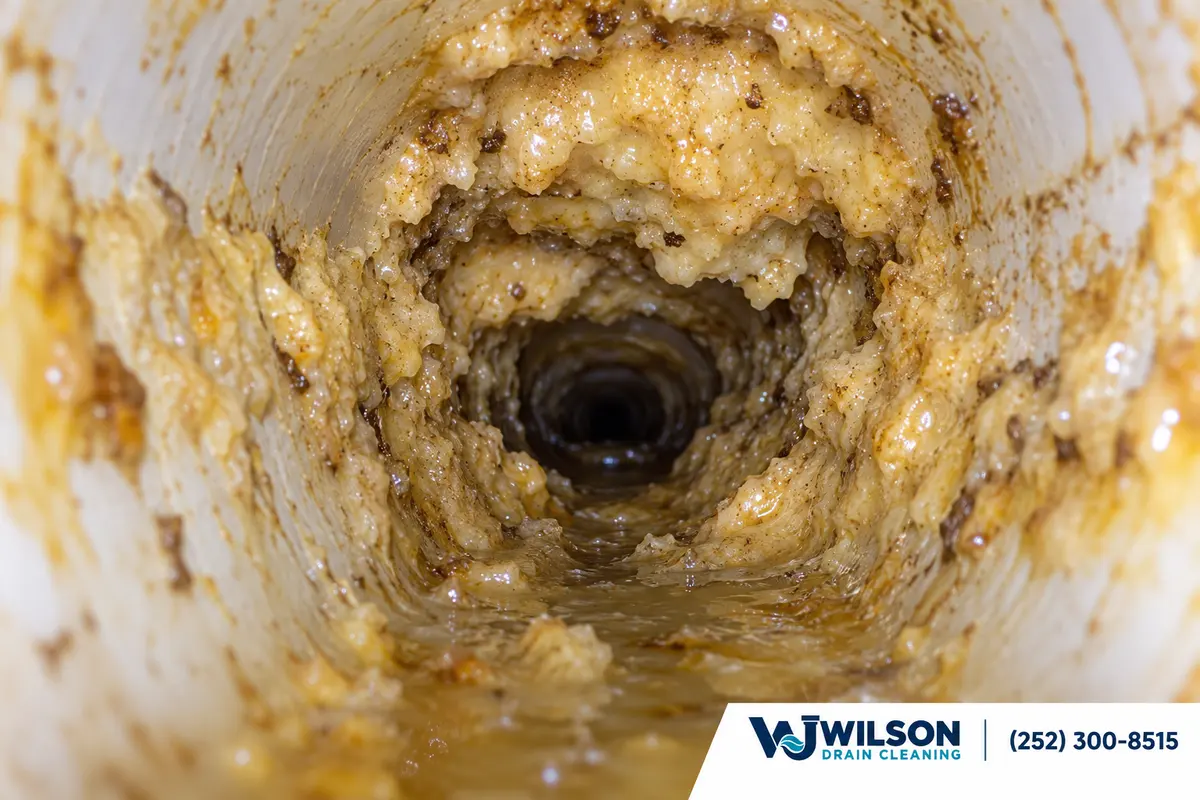
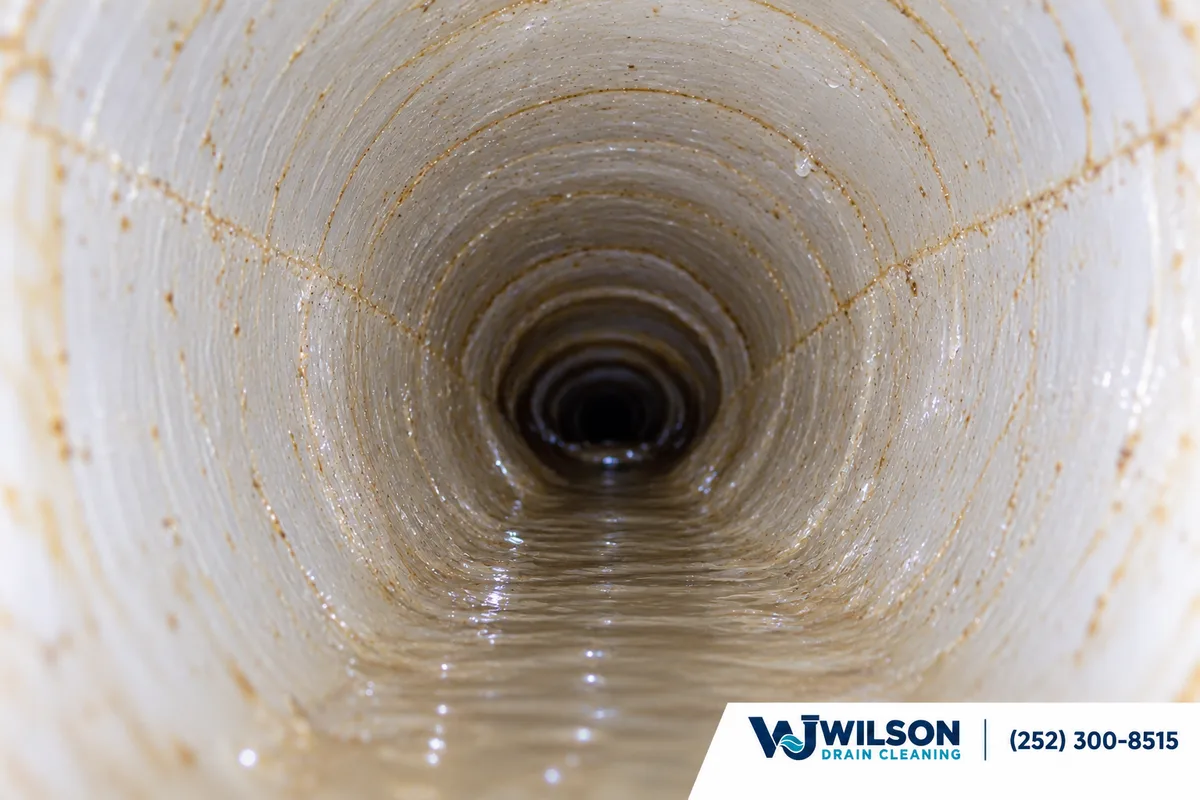
Before and After Examples
Clogs and Problems We Handle
Dish-Machine Drain Problems
A sudden discharge can expose a partly blocked line. The floor sink may drain between cycles yet overflow when a full volume reaches it.
Grease Odors Near Floor Drains
Odor alone does not prove a clog. Dry traps, residue around the drain, interceptor issues and poor venting can smell similar. The source should be identified before cleaning begins.
Restaurant drain cleaning does not have one reliable flat price. Cost depends on the number of branches, pipe length, cleanout access, blockage severity, equipment used and whether work occurs during a restricted service window.
How Much Does Restaurant Drain Cleaning Cost in Wilson?
Published 2026 guides place small commercial drain cleaning near $250 to $600 per visit and commercial restaurant jetting around $750 to $1,200 in some markets. Those figures are broad references, not Wilson quotes. Complex grease lines, multiple access points, camera work or urgent scheduling can cost more.
Ask whether the quote covers setup, each line to be cleaned, camera verification, cleanup and a written record. Also confirm whether the charge is per visit, per branch or based on time.
How Often Should a Restaurant Kitchen Line Be Jetted?
Many busy kitchens start with a three-to-six-month inspection or cleaning interval, then adjust it using actual buildup and service history. Fryer-heavy menus, long branches and heavy dish volume may require more frequent attention. This is a planning range, not a rule for every kitchen.
Do not confuse a line-cleaning schedule with the interceptor rule. Wilson’s FOG ordinance says qualifying interceptors must be serviced as needed for efficient operation and at least every 30 days unless the city manager or designee approves another interval. Cleaning records must be retained for at least three years.
Consider an earlier line check when:
- Floor sinks drain more slowly after peak service
- Water rises when several fixtures discharge together
- Grease appears near the interceptor inlet
- Odor returns soon after surface cleaning
- The same branch has needed repeated cable clearing
Track each visit by line and access point. A useful history is more accurate than scheduling every branch at the same interval.
Keeping Your Kitchen Safe and Open
The work area should stay controlled from setup through final testing. Move food, utensils and open containers away from the drain zone. Protect nearby prep surfaces. Mark wet areas and keep staff out of the equipment path.
If wastewater has backed onto the floor, drain clearing and surface sanitation are separate tasks. The affected area should follow the restaurant’s approved cleanup procedure. Wilson County’s Food Protection Program oversees regulated food establishments and provides local inspection information.
Before restarting normal use, test the branch under realistic flow. A sink that drains with a small stream may still fail when the dish machine releases a full cycle.
Related Services and Where We Offer This
Restaurant grease-line work is available across Wilson and selected nearby communities. Related commercial services can cover the interceptor, larger building drain and other occupied-property lines when those parts fall outside the kitchen branch.
Nearby cities and towns
- Rocky Mount
- Elm City
- Lucama
- Stantonsburg
- Black Creek
- Sims
Wilson neighborhood
- Downtown Wilson
- Ward Boulevard commercial centers
- Nash Street corridor
- Goldsboro Street area
FAQs
How often should restaurant drains be jetted?
Many busy kitchens use a three-to-six-month starting interval. Fryer-heavy menus, long branches and repeated slowdowns may justify more frequent service. Base the final schedule on pipe condition, grease accumulation and the record from previous visits.
Can the lines be cleaned without closing the restaurant?
Service may be planned outside peak kitchen use when availability allows. The safest window depends on access, water use, cleanup needs and whether the affected line serves equipment needed for food preparation.
Is a service record provided?
A useful record lists the date, fixtures or lines cleaned, access point, method and final flow test. Photos or camera footage may also be included when the line and equipment allow it.
Get a Free Quote
Call (252) 300-8515 to discuss the affected fixtures, kitchen schedule and cleanout access. Photos of the floor sink, interceptor area or visible backup can help define the next step before the visit.
Use the get a quote form for a written request. Learn more about the technicians before scheduling.
Call (252) 300-8515 ↗